
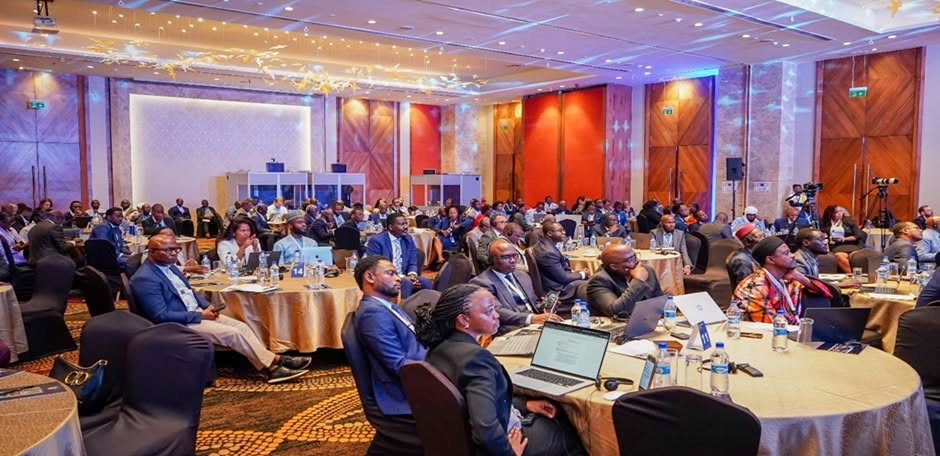
NAIROBI, KENYA – MAY 2026: The Government of Liberia, through its Compact Delivery and Monitoring Unit (CDMU), under the Ministry of Mines and Energy, has participated in the Mission 300 Convening of Compact Delivery and Monitoring Units (CDMUs) held from May 11–14, 2026, in Nairobi, Kenya.
The convening, designed as a working forum was organized by the Global Energy Alliance for People and Planet in collaboration with the Government of Kenya. The event brought together delegations from more than 30 African countries, including development partners and private sector stakeholders. The meeting focused on joint progress review, planning, and accelerating efforts to expand electricity access across the African continent under the Mission 300 (M300).
The Mission 300 is a joint electricity access initiative of the African Development Bank Group (AfDB) and the World Bank Group (WBG), in partnership with key institutions including the Global Energy Alliance for People and Planet, the Rockefeller Foundation, and Sustainable Energy for All, aimed at connecting 300 million people in Africa to electricity by 2030 through country-led National Energy Compacts.
Toward that goal, the Government of Liberia formally committed its National Energy Compact in January 2025 at the Africa Energy Summit in Dar es Salaam, Tanzania, under the leadership of President Joseph Nyuma Boakai, The Compact, now being implemented by key electricity sector stakeholders, reflects a renewed national commitment to expand access to sustainable electricity to 75 percent of the population and to scale up modern cooking solutions by 2030 through targeted policy, institutional, and investment reforms.
Liberia’s representation at the May 2026 Compact Delivery Monitoring Unit summit in the Kenyan were Kelvin K. Grugbaye, Compact Program Manager at the Mines and Energy Ministry who headed the Liberian delegation; Madam Sharon K. Matongo, Mission 300 Fellow; and T. Suwoh Woibah, Monitoring, Evaluation and Learning (MEL) Expert.
Highlighting Liberia’s progress under Compact Pillar 5, Team-lead, Mr. Grugbaye, expounded on Utility Financial Sustainability and Operational Efficiency, which include implementation of cost-reflective tariffs by the Liberia Electricity Regulatory Commission (LERC) across regulated utilities, aligning tariffs with actual service delivery costs.
The Liberian head of delegation then went on to inform fellow conference delegates about the rollout of prepaid metering for government institutions, which aims to improve revenue collection and reduce arrears. Mr. Grugbaye also told the Mission 300 Convening in Nairobi that Liberia has enhanced enforcement against electricity theft, strengthening utility revenues and reducing grid losses.
He also spoke about Liberia’s improved transparency and accountability, including steps toward publishing audited financial statements by the Liberia Electricity Corporation (LEC), and the General Auditing Commission (GAC), and further touched on ongoing standardization of the LEC power network to improve system operation and maintenance while reducing technical losses, as well as ongoing grid densification efforts supported by the World Bank (LESSAP Phase 2) and the African Development Bank to expand electricity access.
Other areas Mr. Grugbaye explained to his fellow delegates include lower power generation costs and improved reliability through diversified energy sources, power imports, a new 20MW solar PV Plant, and Mount Coffee turbine rehabilitation which is expected to (add 22megawatts of electricity to the national grid by Quarter-3 of this year [2026], and Liberia’s active participation in the World Bank Impact Program Community of Practice to enhance reform implementation through peer learning and global expertise.
The Mission 300 convening provided a critical platform for shared learning, collaboration, and joint problem-solving among participating countries. It underscored the importance of robust Monitoring, Evaluation, and Learning (MEL) systems in tracking progress, enabling adaptive implementation, and ensuring accountability in delivering on Energy Compact commitments toward universal energy access in Sub-Saharan Africa.
The convening further emphasized that Compact Delivery Monitoring Units are central to driving Compact implementation and resolving delivery bottlenecks. In this regard, delegates were urged to strengthen whole-of-government coordination and proactively foster enabling environments that catalyze private sector investment, as well as the effective mobilization of financing, technical assistance, and development support needed to achieve the Mission 300 objectives at the country level.
MME PUBLIC RELATIONS